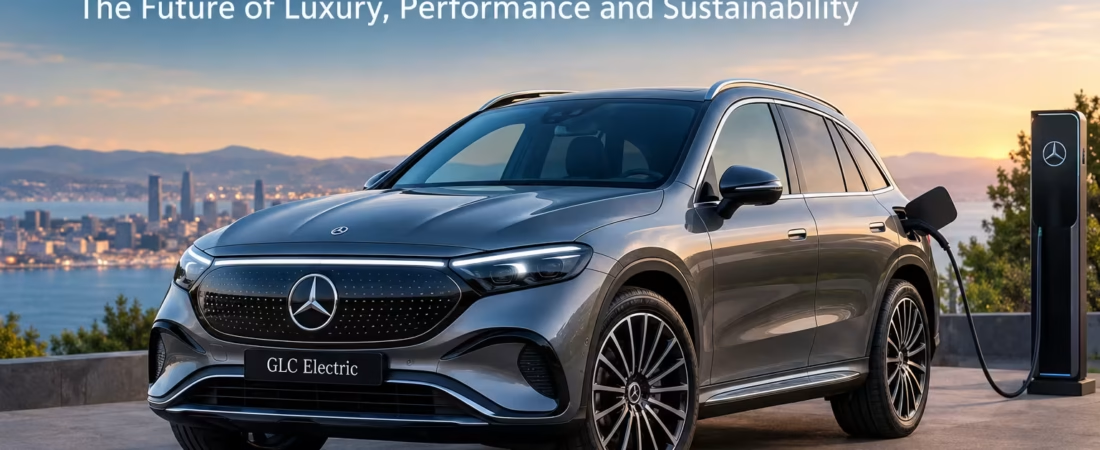
The Mercedes-Benz GLC Electric represents an important step in the evolution of Mercedes-Benz’s best-known luxury SUV family. For buyers who want the comfort, premium design and everyday practicality of a GLC but prefer an all-electric powertrain, this model offers an appealing direction to watch.
Electric luxury SUVs are becoming increasingly capable. Buyers now expect more than zero-emission driving: they want a usable driving range, rapid charging, a sophisticated cabin, advanced driver assistance, intuitive infotainment and enough space for family travel. The Mercedes-Benz GLC Electric enters this competitive landscape with the promise of combining the familiar GLC identity with technology developed specifically for electric mobility.
However, there is a crucial distinction between confirmed specifications, market-specific announcements and features that may vary by trim or country. Pricing, range, charging performance and launch timing can differ between markets, so prospective buyers should check the official information available for their country before making a purchase decision.
This comprehensive guide explains what the Mercedes-Benz GLC Electric is, how its electric technology works, what buyers should look for in its design and equipment, how it compares with rival luxury electric SUVs, and whether it could be a sensible choice for daily driving in India or other markets.
What Is the Mercedes-Benz GLC Electric?
The Mercedes-Benz GLC Electric is the fully electric version of the GLC luxury SUV, developed for customers who want premium-SUV comfort without a petrol or diesel engine. In official Mercedes-Benz communications, the model is also referred to as the GLC with EQ Technology or the all-new electric GLC.
Unlike a conventional GLC that uses an internal-combustion engine, the electric version uses a battery-powered drivetrain. It also introduces a dedicated electric vehicle architecture, an 800-volt electrical system, advanced charging capabilities and Mercedes-Benz’s next-generation MB.OS software platform.
The electric GLC is not simply an existing petrol SUV with its engine replaced by a battery. Its design, packaging and electronic systems have been developed around electric mobility.
Why the electric GLC matters
Mercedes-Benz has built a strong reputation for luxury SUVs, and the GLC has long been one of its core models. Electrifying this established nameplate gives buyers a familiar alternative to newer electric-only SUV families.
The vehicle aims to bring together several qualities:
- Luxury: A carefully designed cabin, comfort-oriented seating and premium materials.
- Long-distance usability: A substantial battery and a claimed WLTP range of up to 715 km in the GLC 400 4MATIC configuration, depending on specification.
- Rapid charging: An 800-volt architecture designed to reduce charging stops when compatible high-power chargers are available.
- Modern technology: MB.OS, the latest generation of Mercedes-Benz’s operating system, and an advanced MBUX infotainment experience.
- Everyday practicality: Five-seat SUV packaging, a conventional rear luggage compartment and an additional front storage compartment.
These characteristics make the GLC Electric relevant to buyers considering a premium family vehicle, a daily commuter or a long-distance touring SUV. The actual experience will depend on the version sold in a particular market, the equipment selected and local charging infrastructure.
Mercedes-Benz GLC Electric: Specifications at a Glance
Mercedes-Benz has published specifications for several versions of the electric GLC in Europe. The following table focuses on the official German-market model range announced in June 2026. These figures should not automatically be treated as specifications for an Indian-market vehicle.
Published manufacturer figures; availability and equipment can vary by market.
| Specification | GLC 250 Electric | GLC 300 4MATIC Electric | GLC 400 4MATIC Electric |
|---|---|---|---|
| Drive configuration | Rear-wheel drive | All-wheel drive | All-wheel drive |
| Peak power | 260 kW | 310 kW | 360 kW |
| Peak torque | 505 Nm | 800 Nm | 800 Nm |
| Usable battery capacity | 85 kWh | 85 kWh | 94 kWh |
| Maximum DC charging power | 320 kW | 320 kW | 330 kW |
| Maximum AC charging power | 11 kW standard / 22 kW optional | 11 kW standard / 22 kW optional | 11 kW standard / 22 kW optional |
| Claimed WLTP range | Up to 650 km | Up to 616 km | Up to 715 km |
| 0–100 km/h acceleration | 5.9 seconds | 4.7 seconds | 4.3 seconds |
| Luggage capacity | 570–1,740 litres | 570–1,740 litres | 570–1,740 litres |
| Front storage compartment | 128 litres | 128 litres | 128 litres |
How should you interpret these figures?
The numbers show that the GLC Electric is available in configurations that prioritise different needs.
The GLC 250 Electric provides rear-wheel drive, substantial power and the lowest entry point within the published German range. The GLC 300 4MATIC adds all-wheel drive and stronger acceleration. The GLC 400 4MATIC sits at the performance end of the lineup, combining the largest listed usable battery with 360 kW of peak power.
The maximum range figure belongs to the GLC 400 4MATIC, but that does not necessarily mean it is the best choice for every driver. The GLC 250 may be more than sufficient for someone whose priority is everyday commuting, while the all-wheel-drive models may appeal to drivers who value additional traction and performance.
Remember that WLTP range is a standardised test figure, not a guarantee of real-world distance. Highway speeds, temperature, wheel size, air-conditioning use, passengers, luggage and driving style all influence how far an EV can travel between charges.
Exterior Design: A New Interpretation of Mercedes-Benz Luxury


6
The electric GLC introduces a fresh design direction while retaining the proportions and recognisable character expected of a Mercedes-Benz midsize SUV.
Its styling is not merely about making the vehicle look futuristic. Exterior details also influence aerodynamic efficiency, visibility, passenger comfort and the overall impression of quality.
The illuminated signature grille
One of the most distinctive elements is the redesigned grille, which reinterprets a familiar Mercedes-Benz design feature for the electric era.
The grille features a chrome frame, a smoked-glass-look structure and integrated contour lighting. Depending on the market and equipment specification, lighting animations and illuminated details may form part of the vehicle’s visual identity.
For a luxury SUV, the grille serves an important branding role. Even as the vehicle moves away from a conventional engine, its front-end design still communicates the identity of the manufacturer.
Buyers should check the exact lighting equipment offered on their preferred trim, because not every market or configuration necessarily receives identical features.
A balanced SUV profile
The side profile is designed to combine a substantial SUV stance with smoother surfaces and a modern silhouette.
When assessing the exterior in person, prospective owners should pay attention to:
- Door openings and how easily passengers can enter the cabin.
- Ground clearance for ramps, speed breakers and uneven roads.
- Wheel and tyre specifications, which affect ride comfort and replacement costs.
- Rear visibility and the driver’s view of the vehicle’s corners.
- The practicality of the boot opening and loading height.
Large alloy wheels can make a luxury SUV look more imposing, but smaller wheel options may offer a better balance of ride comfort, tyre cost and efficiency. The best choice depends on the available configurations and local road conditions.
Rear styling and everyday visibility
The rear design continues the vehicle’s modern visual theme. Lighting signatures and clean body surfaces give it a distinctive appearance without relying on the large exhaust outlets found on conventional performance SUVs.
However, attractive styling should not replace a practical inspection. Check rear-window visibility, parking-camera quality, the operation of the tailgate and whether the luggage compartment can accommodate the items you regularly carry.
For family buyers, these details may matter more over several years of ownership than any single exterior styling feature.
Interior and Cabin Experience


8
The cabin is a major part of the electric GLC’s appeal. Mercedes-Benz has positioned the interior around a combination of digital functionality, comfort and a welcoming atmosphere.
The company has highlighted a seamless MBUX HYPERSCREEN, matrix backlighting and zone-dimming technology as part of the new electric GLC’s interior presentation. Actual screen configurations and standard equipment depend on the selected model and market.
Digital displays and the MBUX experience
Modern luxury vehicles increasingly use digital displays for navigation, vehicle settings, entertainment and driver information. The GLC Electric follows that direction with the next generation of Mercedes-Benz’s infotainment technology.
Depending on configuration, the digital experience can bring together:
- Driving information and battery status.
- Navigation and charging-stop planning.
- Climate and comfort settings.
- Smartphone integration.
- Vehicle personalisation.
- Selected connected services and software features.
The benefit of an integrated system is that drivers can access information without switching between separate devices.
Nevertheless, the quality of an infotainment system depends on more than screen size. Menu structure, response speed, glare, voice recognition and the ease of controlling basic functions all affect everyday usability.
During a test drive, try common tasks such as changing the cabin temperature, finding a charging station, adjusting navigation and connecting a phone. These actions reveal whether the technology feels intuitive or distracting.
MBUX HYPERSCREEN: What buyers should know
The HYPERSCREEN is designed to create a broad, integrated digital surface across the dashboard. Its presentation can make the cabin feel more contemporary and allows information to be organised across different display areas.
For technology-focused buyers, the attraction is clear: a digital environment that brings together the driver’s information and the passenger-facing entertainment experience.
There are practical considerations, too. Large displays can collect fingerprints, reflect sunlight and require drivers to navigate menus for functions that physical buttons once handled directly.
The most useful question is not simply whether a car has a large screen. It is whether its interface makes regular tasks safer and easier.
Seating comfort and passenger space
A luxury SUV should be comfortable on short journeys as well as longer trips. Seat shape, cushion length, lumbar support, headroom and the ability to find a suitable driving position all matter.
When assessing the electric GLC, inspect:
- Front-seat support for the lower back and thighs.
- Adjustment range for drivers of different heights.
- Rear-seat knee room and foot space.
- Headroom beneath the panoramic roof, if fitted.
- Ease of fitting child seats.
- Rear air vents and available charging ports.
- Cabin storage for bottles, bags and everyday accessories.
Do not assume that an electric platform automatically guarantees the most spacious cabin in its class. Battery placement, floor height, seat design and vehicle dimensions all influence the result.
If the vehicle will regularly carry adults in the back, take the intended passengers along for the test drive.
Materials, lighting and perceived quality
The electric GLC’s interior design follows Mercedes-Benz’s broader focus on a refined, technology-led cabin. Ambient lighting and carefully arranged dashboard surfaces can contribute to a more personalised atmosphere.
Yet the quality of a luxury interior is best judged through direct contact. Examine the door trims, armrests, seat upholstery, switches, storage covers and areas that passengers touch frequently.
Also check whether the upholstery and decorative finishes suit your climate and usage. A light-coloured cabin may feel airy but require more frequent cleaning, while certain glossy surfaces can show fingerprints easily.
The right interior is the one that continues to feel comfortable and well assembled after years of everyday use.
Battery, Range and Electric Performance
The battery is the foundation of any electric vehicle. It determines how much energy the car can store, affects its weight and packaging, and plays a major role in charging time and driving range.
The Mercedes-Benz GLC Electric uses a lithium-ion battery system. In the published European lineup, the usable battery capacity is 85 kWh in the GLC 250 and GLC 300 4MATIC, rising to 94 kWh in the GLC 400 4MATIC.
What does an 85 kWh or 94 kWh battery mean?
A kilowatt-hour (kWh) measures energy capacity. It is different from a kilowatt (kW), which measures power.
A simple way to understand the distinction is:
- Battery capacity, measured in kWh: How much usable energy the battery stores.
- Motor power, measured in kW: How quickly the electric drivetrain can deliver energy to produce performance.
- Charging power, measured in kW: How quickly energy can enter the battery under suitable conditions.
- Energy consumption, measured in kWh/100 km: How much energy the vehicle uses to travel a given distance.
For example, a car consuming 20 kWh per 100 km would theoretically use 40 kWh to travel 200 km under comparable conditions. Actual consumption changes with speed, weather, terrain and driving behaviour.
A larger battery can support longer journeys, but it can also add weight and cost. Battery size should therefore be considered alongside efficiency, charging access and the distances you regularly drive.
Mercedes-Benz GLC Electric range
Mercedes-Benz lists a maximum WLTP range of up to 715 km for the GLC 400 4MATIC Electric. The GLC 250 Electric is listed at up to 650 km, while the GLC 300 4MATIC Electric is listed at up to 616 km.
These are impressive official figures for a midsize luxury SUV, but it is essential to understand what they mean in practice.
WLTP is a standardised European testing procedure designed to make vehicle efficiency and range figures more comparable. It is not a prediction that every owner will achieve the same distance in everyday driving.
Real-world range can be lower for several reasons:
- Highway speeds: Aerodynamic drag rises rapidly as speed increases.
- Low temperatures: Battery efficiency and cabin heating can increase energy use.
- Air-conditioning: Climate control consumes electricity, particularly when the cabin needs substantial cooling or heating.
- Wheel and tyre selection: Larger wheels and certain tyres can reduce efficiency.
- Driving style: Rapid acceleration and frequent high-speed driving generally increase consumption.
- Passenger and luggage load: Additional weight can affect efficiency, especially in stop-start traffic and hilly areas.
- Road conditions: Steep climbs, rough surfaces and traffic conditions change energy demand.
For buyers in India, hot weather, monsoon conditions, traffic congestion and high-speed expressway driving can all affect the result differently.
How to estimate your own driving range
Rather than relying on a headline number, estimate the energy your routine actually requires.
Suppose your planned journey is 250 km and your vehicle averages 20 kWh/100 km under your expected driving conditions.
The estimated energy requirement would be:
\[ 250 \times \frac{20}{100}=50\text{ kWh} \]
If you plan to keep a reserve of 15% of a 94 kWh usable battery, the energy available for normal travel would be approximately:
\[ 94 \times 0.85=79.9\text{ kWh} \]
Under these illustrative assumptions, the trip would fit within the available energy budget. The calculation is not a guarantee of the GLC’s consumption; it demonstrates how to plan using an estimated efficiency figure rather than an advertised maximum range.
For longer journeys, include a buffer for detours, charger availability, weather and unexpected traffic.
Is the GLC Electric suitable for long-distance driving?
It has several features that support long-distance use: a substantial battery, a claimed high WLTP range and an electrical architecture designed for rapid charging.
However, a successful road trip depends on more than battery capacity. Drivers need compatible chargers along the route, reliable payment methods, suitable charging locations and enough flexibility to account for occupied or out-of-service stations.
Before buying an EV primarily for interstate travel, map a few routes you actually expect to use. Check the locations and charging speeds of stations along those routes, including alternatives if a planned stop is unavailable.
A car with excellent range can still be inconvenient if the charging network along your regular route is unreliable.
Charging Technology: The Role of 800-Volt Architecture


5
Charging speed is one of the most important considerations when moving from a petrol or diesel SUV to an electric vehicle.
The electric GLC’s 800-volt architecture is designed to support high-power charging and improve the efficiency of the electrical system. Mercedes-Benz lists maximum DC charging power of up to 330 kW for the GLC 400 4MATIC and up to 320 kW for the GLC 250 and GLC 300 4MATIC in the published German specifications.
How fast can the Mercedes-Benz GLC Electric charge?
For the GLC 400 4MATIC, Mercedes-Benz has advertised the ability to add up to 303 km of range in approximately 10 minutes under suitable conditions. The expanded model range includes corresponding charging claims for the other variants, with the amount of range added depending on the model and test assumptions.
This is a manufacturer claim, not a guarantee that every public charging stop will add that much range.
The result depends on factors including:
- The charger’s actual power output.
- Whether the charger supports the vehicle’s voltage and charging requirements.
- Battery temperature and state of charge.
- The battery’s charging curve at that moment.
- Energy consumption used to calculate the added distance.
- Whether the charging station is sharing power with another vehicle.
A charger advertised as 350 kW does not automatically deliver 350 kW to every vehicle connected to it. The car and charger must be compatible, and the battery must be able to accept the available power.
Understanding 10–80% charging time
Mercedes-Benz lists a DC charging time of approximately 22 minutes from 10% to 80% state of charge for the three published variants, subject to the manufacturer’s stated conditions.
This measure is often more useful than a claim about the distance added in ten minutes because it describes a defined battery charging window.
Even so, the time required on a particular journey may differ. Charging speed usually changes as the battery fills, and a cold battery or an incompatible charging station can increase the time required.
For frequent road trips, ask the dealer for the exact charging conditions behind the published figure and verify whether the required chargers are available on your usual routes.
Home charging: Is it worth installing a wallbox?
For drivers who have private parking and a suitable electrical installation, home charging can make EV ownership much easier.
A home wallbox can allow the vehicle to recharge overnight, reducing the need to visit public charging stations for ordinary commuting.
The main advantages include:
- Convenient charging while the car is parked.
- Less dependence on public charging availability.
- Easier scheduling for daily journeys.
- The possibility of using off-peak electricity tariffs where available.
- A more predictable charging routine.
However, home charging is not automatically straightforward for every owner.
Apartment residents may need permission from the housing society or property manager, an approved electrical installation and an appropriate way to measure or bill electricity consumption. A dedicated parking space and a suitable power supply are also important.
Before purchasing the vehicle, obtain a home-charging assessment from a qualified installer and confirm the wallbox requirements with Mercedes-Benz.
AC charging versus DC fast charging
| Charging type | Best use | Main consideration |
|---|---|---|
| AC charging | Overnight charging at home or extended parking | Usually slower, but convenient for routine use |
| DC fast charging | Highway stops and time-sensitive charging | Faster when the vehicle and charger support high power |
| Workplace charging | Recharging during working hours | Depends on access, parking duration and charger availability |
| Destination charging | Hotels, shopping centres and other destinations | Useful when the car can remain parked for several hours |
The GLC Electric’s published specifications include 11 kW AC charging as standard and an optional 22 kW capability in the listed European versions. Actual AC charging time depends on the equipment installed in the vehicle, the supply and the charger.
For most daily drivers, reliable access to a suitable charger is more valuable than having the highest possible DC charging figure.
Charging tips for everyday owners
To make charging more convenient:
- Charge at home when practical, rather than relying exclusively on public stations.
- Use the car’s navigation system to identify compatible charging stops.
- Check charging-network access and payment arrangements before a long trip.
- Avoid arriving at an unfamiliar remote charger with very little battery remaining.
- Allow additional time for busy periods, poor weather or charger faults.
- Follow the manufacturer’s guidance on battery care and charging limits.
A well-planned charging routine reduces the likelihood that charging will interfere with everyday life.
Performance and Driving Experience
Electric powertrains deliver torque differently from conventional engines. They can respond quickly to accelerator inputs without waiting for engine revs to build, making them particularly well suited to smooth urban acceleration and confident overtaking.
The GLC Electric’s published European variants offer different performance levels, with the GLC 400 4MATIC producing up to 360 kW and accelerating from 0 to 100 km/h in 4.3 seconds. The GLC 300 4MATIC is listed at 310 kW and 4.7 seconds, while the rear-wheel-drive GLC 250 is listed at 260 kW and 5.9 seconds.
What does 4MATIC mean on the electric GLC?
Mercedes-Benz uses the 4MATIC designation for its all-wheel-drive systems.
In the electric GLC’s all-wheel-drive versions, electric motors drive both axles. This allows the drivetrain to distribute propulsion between the front and rear wheels according to the vehicle’s control strategy and driving conditions.
Potential advantages include:
- Improved traction when accelerating on slippery surfaces.
- Greater flexibility when driving on wet or uneven roads.
- Strong acceleration in higher-output versions.
- Additional confidence when road conditions are challenging.
All-wheel drive does not make a vehicle immune to skidding, hydroplaning or poor tyre grip. Tyre quality, tread depth, speed and driver judgement remain critical.
The rear-wheel-drive GLC 250 may be a sensible alternative for drivers who rarely encounter conditions that require all-wheel drive and want to prioritise the entry-level configuration.
Regenerative braking and one-pedal-style driving
Electric vehicles can recover some energy when slowing down. This process, called regenerative braking, allows the motor to operate as a generator and send energy back to the battery.
Mercedes-Benz describes the electric GLC as offering powerful recuperation and a one-pedal-style driving experience. Its published US model information also lists four recuperation settings, including an automatic mode. Exact controls and available functions depend on the market and configuration.
Regenerative braking can be especially useful in urban traffic because the vehicle can recover energy during deceleration rather than relying entirely on friction brakes.
Drivers should understand the available settings before using the car in unfamiliar conditions. The degree of deceleration can differ between modes, and the driver must remain prepared to use the brake pedal whenever required.
Ride comfort and handling
A luxury SUV needs to manage potholes, broken surfaces, highway expansion joints and sharp changes in direction without making occupants uncomfortable.
Mercedes-Benz has highlighted AIRMATIC air suspension with intelligent suspension control as an available feature in its technical information for the electric GLC. Rear-axle steering is also available in the broader equipment offering described by the manufacturer. Availability depends on the particular version and market.
Air suspension can adjust ride height and suspension behaviour to support comfort and body control. Rear-axle steering can improve low-speed manoeuvrability and help the vehicle respond more naturally at higher speeds.
These systems can be valuable, but buyers should consider their complexity and long-term maintenance implications as well as their benefits.
During a test drive, try the vehicle on the kinds of roads you use most. A smooth highway drive alone will not reveal how well the suspension handles broken urban surfaces or how easily the SUV manoeuvres into a tight parking space.
Safety and Driver Assistance Technology
Safety should be evaluated using the exact equipment and independent test results applicable to the vehicle sold in your market.
Mercedes-Benz’s technical information for the electric GLC describes a range of driver-assistance systems and protective technologies, including a centre airbag and PRE-SAFE equipment. It also discusses advanced lighting technology and high-voltage protection. The presence of particular features depends on the market and specification.
Active driver assistance
Depending on the equipment fitted, modern driver-assistance systems may help drivers maintain a safe following distance, remain within lane markings or receive warnings when a potential collision is detected.
These systems can reduce workload in certain circumstances, but they do not replace attention or responsible driving.
When comparing variants, check which systems are included as standard and which require an optional package or subscription. Ask whether each feature operates on local roads and whether its functionality changes according to local regulations.
Passive safety and occupant protection
Passive safety systems are designed to help protect occupants during a collision. Airbags, seatbelts, body structures and restraint systems work together rather than independently.
For an electric vehicle, high-voltage electrical safety is another important consideration. The vehicle’s battery and high-voltage components require specialised design and service procedures.
Owners should follow the manufacturer’s instructions after a collision, flood or event that may have damaged the battery or electrical system. Do not attempt to inspect or repair high-voltage components yourself.
What about crash-test ratings?
A manufacturer’s safety features are not the same as an independent crash-test rating.
Before buying, look for an applicable assessment from a recognised testing organisation, making sure it covers the correct vehicle generation and relevant market specification. Do not assume that a rating from a related petrol model automatically applies to the electric GLC.
Also check whether the vehicle has the safety equipment you actually want, including the relevant airbags, parking assistance, cameras and driver-alert systems.
Infotainment, Connectivity and MB.OS
The electric GLC introduces MB.OS, Mercedes-Benz’s operating system designed to integrate vehicle functions and connected services. The company positions it as a core part of its newer vehicle architecture.
For drivers, the operating system matters because the software connects several parts of the ownership experience.
Navigation designed for electric driving
An EV navigation system needs to do more than identify the shortest route. It should also help drivers understand whether they have enough energy to reach their destination and where charging may be necessary.
Mercedes-Benz describes intelligent navigation and connected charging services within the electric GLC’s technology package.
Useful functions to evaluate include:
- Finding charging stations along a planned route.
- Showing compatible chargers and their charging capabilities.
- Estimating battery charge at the destination.
- Incorporating charging stops into journey planning.
- Updating the route when conditions change.
- Displaying charging availability where supported by the service.
Connected information depends on network coverage, the service package and local data availability. Drivers should retain a backup plan for long journeys rather than assuming that every charger listed in a navigation system will be operational.
Smartphone integration
Smartphone connectivity can make daily driving easier by allowing drivers to use familiar navigation, audio and communication apps.
The 2027 US-market GLC Electric quick reference guide lists wireless Apple CarPlay and Android Auto among the digital extras associated with the vehicle. Buyers should confirm availability, compatibility and any subscription conditions for their own market.
Before taking delivery, ask the dealer to demonstrate phone pairing, contact synchronisation, navigation hand-off and audio controls. Also check whether the car supports multiple driver profiles and whether those profiles retain seat, mirror and infotainment preferences.
Software updates and connected services
Connected cars can receive certain software improvements or service updates over time. This can make the vehicle’s digital systems more adaptable than traditional systems that rarely change after delivery.
However, owners should not assume that every feature will be upgraded indefinitely or included without charge.
Before purchasing, ask:
- Which services are included with the vehicle?
- How long do included subscriptions last?
- Which functions require a paid renewal?
- Can updates be installed remotely, or is a dealer visit required?
- What happens to navigation and connected services when a subscription expires?
These questions are particularly relevant when comparing the initial price of two luxury electric SUVs.
Practicality: Boot Space, Storage and Family Use
A luxury electric SUV must work as a family vehicle, not just as a showcase for technology.
The published European electric GLC specifications list a rear luggage capacity of 570 litres, expandable to 1,740 litres, plus a 128-litre front storage compartment. These figures are manufacturer specifications and may vary according to measurement method or configuration.
Rear luggage compartment
The rear boot should be assessed against the things you actually carry. A stated capacity in litres is useful, but it cannot tell you everything about the shape of the luggage area.
If possible, check whether the compartment can accommodate:
- Several medium-sized suitcases.
- A large stroller or pram.
- Shopping bags and everyday luggage.
- Sports equipment.
- Foldable mobility aids or other bulky items.
Also inspect the rear seats’ folding arrangement, the loading lip and whether the floor can be adjusted. A wide, accessible boot can be more useful than a slightly larger compartment with awkward proportions.
What is the front storage compartment for?
The additional front compartment, often called a frunk, provides storage beneath the front bonnet. Since an electric powertrain does not require the same engine packaging as a conventional SUV, manufacturers can use this space for additional storage.
The electric GLC’s published specifications list a 128-litre front compartment.
It may be useful for smaller bags, charging accessories or items you prefer to keep separate from the main luggage area. Check the owner’s manual for approved uses, loading limits and any restrictions.
Rear-seat comfort and family travel
For family use, pay attention to more than legroom. Rear-seat access, door opening angles, headroom, child-seat anchorage points and the ease of reaching seatbelt buckles all matter.
If you frequently travel with older family members, test entry and exit height. An SUV’s tall seating position can be convenient, but the actual ease of access depends on seat height, sill design and the passenger’s mobility.
For long trips, also assess rear climate controls, charging ports and the ability to recline the seats comfortably.
Towing and carrying additional loads
Mercedes-Benz’s published German-market specifications list a maximum braked trailer load of up to 2,400 kg for the GLC 300 and GLC 400 4MATIC, while the GLC 250 is listed at up to 2,200 kg. These figures apply to the specified configurations and must not be assumed to apply to every market.
Towing can substantially increase energy consumption and reduce driving range. Buyers who plan to tow should verify the exact vehicle’s permitted trailer mass, towbar availability, payload limits and local regulations.
Mercedes-Benz GLC Electric Price and Market Availability
Price is one of the most important questions for prospective buyers. However, there is no single worldwide price for the electric GLC. Taxes, import duties, standard equipment, optional packages and local distribution arrangements can create significant differences between countries.
The vehicle has progressed beyond the concept stage. Mercedes-Benz announced European ordering for the GLC 400 4MATIC in October 2025 and expanded the German lineup in June 2026 with the GLC 250 Electric and GLC 300 4MATIC Electric. The company also announced the 2027 US-market GLC 400 4MATIC Electric with a US starting MSRP of $63,500 and an expected arrival at US dealerships in fall 2026.
Official European prices
The following are published German-market starting prices announced by Mercedes-Benz in June 2026.
| Model | Starting price including German VAT |
|---|---|
| GLC 250 Electric | €64,736 |
| GLC 300 4MATIC Electric | €68,306 |
The original announcement also listed prices excluding VAT. These figures are specific to Germany and should not be converted directly into an expected Indian showroom price.
What could affect the price in India?
Indian buyers should distinguish between an official local launch price and a speculative estimate.
If and when the electric GLC is offered in India, the final price could be influenced by:
- Import duties or the manufacturing and import arrangement.
- Goods and services tax and applicable vehicle taxes.
- Homologation and market-specific equipment.
- Battery and charging-system specifications.
- Warranty coverage and service packages.
- Standard and optional features.
- Currency movements and local pricing strategy.
An overseas price converted into rupees does not account for these factors.
As of 21 October 2026, the European and US announcements cited here do not establish an official Indian launch date or an India-specific ex-showroom price. Buyers in India should verify availability directly with Mercedes-Benz India or an authorised dealer before making purchase plans.
Should you wait for an Indian launch?
The answer depends on your urgency and requirements.
If you need a vehicle soon, compare electric SUVs that are officially available in India rather than relying on a future launch assumption. An officially sold vehicle provides greater clarity about the warranty, service network, charging support and resale considerations.
If your purchase can wait, follow official announcements about the electric GLC’s Indian availability, specification and pricing. Also consider whether the car’s charging capabilities match the public charging infrastructure and home-parking arrangements available to you.
A future model can be attractive without necessarily being the best current purchase.
Estimated Ownership Costs: What Buyers Should Calculate
An electric SUV may cost less to operate per kilometre than a comparable petrol or diesel vehicle, particularly when much of the charging takes place at home. However, the actual financial result depends on purchase price, electricity tariffs, fuel prices, usage and maintenance costs.
For a premium EV, the total cost of ownership matters more than a single headline running-cost estimate.
1. Electricity cost
Use this formula to estimate the cost of charging energy:
\[ \text{Cost per 100 km} = \text{Consumption} \times \text{Electricity tariff} \]
For illustration, assume the vehicle consumes 20 kWh/100 km and your effective electricity tariff is ₹10 per kWh.
\[ 20 \times ₹10 = ₹200 \]
That produces an estimated energy cost of ₹200 per 100 km, before allowing for charging losses or additional fees.
This is an example, not an official consumption figure or tariff for the Mercedes-Benz GLC Electric. Public fast charging may cost more than home charging, and charging losses mean the electricity drawn from the supply can exceed the energy delivered to the battery.
2. Compare like-for-like fuel costs
For a fair comparison with a petrol SUV, use your own expected driving distance and the actual fuel efficiency you would obtain.
For example, consider a hypothetical petrol SUV averaging 12 km per litre, with petrol priced at ₹100 per litre.
Its estimated fuel cost per 100 km would be:
\[ \frac{100}{12}\times ₹100 \approx ₹833 \]
Compared with the illustrative EV energy cost of ₹200 per 100 km, the difference would be about ₹633 per 100 km before accounting for charging losses, maintenance, insurance and other expenses.
The purpose of this example is to show how the comparison works. Actual results depend on the vehicles and local energy prices.
3. Maintenance and repairs
Electric vehicles have fewer routine powertrain service requirements than conventional vehicles because they do not need engine oil changes, spark plugs or exhaust-system maintenance.
That does not mean an EV is maintenance-free.
Owners should still budget for:
- Tyres and wheel alignment.
- Brake fluid and other scheduled service items.
- Cabin air filters and air-conditioning maintenance.
- Suspension and steering components.
- Wiper blades and other consumables.
- Software-related diagnostics where applicable.
- Repairs outside the warranty period.
The battery, electric motors and high-voltage electronics can be expensive to repair if significant faults occur outside warranty coverage. Ask for the precise warranty terms, including battery coverage, exclusions, mileage limits and transferability.
4. Insurance and depreciation
A luxury electric vehicle may carry substantial insurance costs because of its purchase price, replacement parts and specialised repair requirements.
Depreciation is equally important. The future resale value of an electric SUV may be influenced by battery condition, remaining warranty, charging technology, newer model launches and changes in used-EV demand.
No reliable resale estimate should be treated as guaranteed.
For a financially sound purchase decision, compare the full cost of ownership over the period you intend to keep the car, rather than looking only at monthly charging expenses.
Mercedes-Benz GLC Electric vs Petrol and Diesel GLC
The electric GLC and its combustion-engine counterparts target buyers who value premium SUV comfort, but they deliver different ownership experiences.
| Consideration | GLC Electric | Petrol or diesel GLC |
|---|---|---|
| Power source | Rechargeable battery and electric motors | Internal-combustion engine |
| Refuelling or charging | Requires charging access | Can use conventional fuel stations |
| Low-speed driving | Smooth, immediate electric response | Depends on engine and transmission |
| Routine powertrain maintenance | No engine oil or exhaust-system servicing | Includes engine-related servicing |
| Long-distance planning | Requires charging-route planning | Generally simpler refuelling planning |
| Home energy access | Can charge at home with suitable equipment | No home charging requirement |
| Tailpipe emissions while driving | None | Produces tailpipe emissions |
| Best ownership fit | Drivers comfortable with charging routines | Drivers prioritising conventional refuelling flexibility |
The table describes broad powertrain differences, not a claim that one type is superior in every situation.
Who should choose the electric version?
The electric GLC is worth considering if you can charge at home or work, drive regular routes that fit within a practical range and value quiet, responsive performance.
It may be especially appealing to buyers who do much of their driving in urban areas but also want an SUV capable of longer journeys with appropriate charging stops.
Who may prefer a combustion-engine GLC?
A petrol or diesel version may be more practical for people who lack reliable charging access, frequently travel through areas with limited public charging or need to refuel quickly on unpredictable routes.
It can also make sense for drivers whose parking arrangements make home charging difficult.
The right choice is determined by the complete ownership situation, not by the badge or drivetrain alone.
Mercedes-Benz GLC Electric vs BMW iX3 and Other Luxury Electric SUVs


The electric GLC competes in a fast-developing segment of premium electric SUVs. Buyers may also consider the BMW iX3, the Audi Q6 e-tron and the Porsche Macan Electric.
These vehicles do not have identical dimensions, pricing or market positioning. The best comparison is between versions available in the same country at similar prices.
Mercedes-Benz GLC Electric vs BMW iX3
The BMW iX3 is a particularly relevant alternative because it competes in the premium electric SUV category and appeals to buyers who value technology, performance and everyday usability.
The GLC Electric’s key published strengths include its 800-volt architecture, high claimed WLTP range in the GLC 400 4MATIC, digital cabin technology and a choice of rear-wheel-drive and all-wheel-drive variants in Europe.
To compare the two fairly, evaluate the specific versions on sale in your market. Look at real-world range tests, charging performance, rear-seat comfort, luggage capacity, driver-assistance equipment, warranty terms and final on-road cost.
Do not select a winner solely because one manufacturer advertises a higher maximum range or a larger screen.
Mercedes-Benz GLC Electric vs Audi Q6 e-tron
The Audi Q6 e-tron is another relevant premium electric SUV, particularly for buyers who value a technology-led cabin and an established luxury brand.
A useful comparison should consider the actual trim levels, battery capacity, charging curves and standard equipment available locally. The speed of charging on a compatible station can be more important to some drivers than the maximum charging power advertised in a brochure.
Interior usability should also receive close attention. Test the climate controls, navigation, rear seating and driver displays in both vehicles before deciding.
Mercedes-Benz GLC Electric vs Porsche Macan Electric
The Porsche Macan Electric may appeal more strongly to drivers who prioritise sporty road manners and performance-oriented engineering.
The GLC Electric, by contrast, places substantial emphasis on Mercedes-Benz’s interpretation of comfort, cabin technology and everyday luxury.
The distinction is not absolute: both vehicles can combine comfort and performance. The useful test is to drive them on the same types of roads and assess steering response, suspension behaviour, seating comfort and cabin noise.
Which electric SUV is best for Indian buyers?
For India, the strongest option is often the vehicle that combines suitable range with dependable local support.
Check these factors before committing:
- Is the exact vehicle officially sold in India?
- Is there a service centre within a practical distance?
- Can you install a home charger?
- Does the local public charging network support the vehicle?
- What are the battery and vehicle warranty terms?
- How much will insurance, tyres and scheduled servicing cost?
- Is the vehicle’s ground clearance suitable for your regular routes?
A premium SUV is a long-term purchase. Local support and convenience can outweigh small differences in headline specifications.
Is the Mercedes-Benz GLC Electric Worth Buying?
Whether the electric GLC is worth buying depends on what you expect from a luxury SUV and how comfortably an electric vehicle fits into your daily routine.
The model’s published specifications make it a compelling option on paper. Its available configurations combine substantial power, a high claimed WLTP range, rapid DC charging, a premium digital cabin and practical storage. Yet specifications alone cannot establish whether it is the right vehicle for you.
Reasons to consider the GLC Electric
1. Long claimed driving range
The GLC 400 4MATIC’s published WLTP range of up to 715 km could reduce the frequency of charging stops for drivers whose real-world journeys suit the vehicle’s efficiency.
2. Strong performance
The electric drivetrain provides immediate response, while the higher-output all-wheel-drive configuration offers acceleration that should appeal to performance-conscious buyers.
3. Premium cabin technology
MB.OS and the MBUX digital experience give the vehicle a modern technology platform, while the interior focuses on comfort and personalisation.
4. Rapid charging capability
The 800-volt architecture and high maximum DC charging figures can reduce charging time when the right infrastructure is available.
5. Everyday practicality
The published rear luggage capacity and additional front storage compartment make the GLC Electric worth considering for family use, shopping and travel.
Reasons to think carefully before buying
1. Purchase price
The electric GLC sits in the premium SUV category. The complete cost, including options, insurance, charging installation and taxes, needs to fit your budget.
2. Charging access
A high-capacity battery does not solve the problem of an inconvenient charging network. Drivers without home or workplace charging should investigate their local options carefully.
3. Real-world range
Advertised range figures use standardised testing. High-speed driving, weather and other factors can reduce the distance available between charges.
4. Long-term ownership uncertainty
Future depreciation, repair costs and battery condition can influence the total cost of ownership. Warranty coverage and local service support deserve close attention.
5. Market availability
Buyers should confirm which variants, features and warranty arrangements are offered in their country rather than assuming that every announced European specification will be available locally.
A practical buyer checklist
Before paying a deposit, use this checklist to evaluate the vehicle.
Pre-purchase checklist
0 of 9Confirm the exact model, variant and market specification.Obtain the official on-road quotation, including optional equipment and taxes.Check the battery warranty, vehicle warranty and roadside assistance.Arrange a home-charging feasibility assessment if needed.Compare the available public chargers on your regular routes.Test rear-seat comfort, luggage space and visibility.Drive the vehicle on urban roads and highways if possible.Compare insurance, tyres, servicing and expected depreciation.Confirm the delivery date and cancellation terms in writing.
Completing these checks will help you make a decision based on your actual needs instead of relying on marketing claims alone.
How to Get Ready for Electric GLC Ownership
If you are considering the Mercedes-Benz GLC Electric, preparing for the change in powertrain can make the transition easier.
Step 1: Understand your driving routine
Record the approximate distance you drive on a typical weekday, how often you travel between cities and how frequently you make longer trips.
A driver who covers 40–60 km per day and charges overnight has different needs from someone who regularly travels several hundred kilometres between cities.
Step 2: Assess your charging options
Identify whether you can charge at home, at work or at a regular destination.
If you live in an apartment, discuss charger installation and electricity billing with the relevant property manager or housing society before buying.
Step 3: Learn how to plan longer journeys
Identify compatible charging stations on your regular routes. Check charging speeds, opening hours, access restrictions and alternative stations.
Plan around the battery charge you expect to have when arriving, not merely the distance to the next station.
Step 4: Compare the complete cost
Obtain an official quotation and calculate the expected cost of ownership over your intended holding period.
Include purchase price, insurance, electricity, tyres, servicing, charging installation and an allowance for depreciation.
Step 5: Test the car in realistic conditions
Try the seats, infotainment, parking systems, regenerative braking and driver-assistance controls. Drive over a mixture of roads and assess whether the vehicle suits your preferences.
If you are comparing several electric SUVs, use the same route and similar conditions for each test drive whenever possible.
Common Mistakes to Avoid When Buying a Luxury Electric SUV
Choosing a car based only on advertised range
Maximum range is useful for initial comparisons, but real-world efficiency and charging access determine the ownership experience. Compare independent road tests where available and make conservative estimates for your own driving.
Assuming every fast charger will deliver maximum power
The charger’s rated output is only one part of the equation. Vehicle compatibility, battery temperature and charge level all affect the power actually delivered.
Ignoring home-charging limitations
A buyer who cannot install a charger may need to rely on public infrastructure. This can change both the cost and convenience of ownership.
Overlooking optional equipment and subscriptions
Some comfort, lighting, driver-assistance or connected features may depend on a selected package or paid digital service. Confirm the equipment list and ongoing charges in writing.
Underestimating tyre and repair costs
Luxury SUVs can require expensive tyres and specialised repairs. Ask about replacement costs and the availability of authorised repair facilities before committing.
Confusing a global launch with local availability
A model may be announced, produced or sold in one region without being available in another. Check the official local catalogue and dealer information before planning around a launch date or price.
Future Outlook for the Mercedes-Benz GLC Electric
The electric GLC is part of a broader shift in the luxury-car market: established manufacturers are bringing electric powertrains into familiar vehicle families rather than treating electric cars as a completely separate category.
This approach could appeal to customers who want to move away from petrol and diesel without giving up the size, comfort or premium identity they associate with a traditional SUV.
Several developments will shape the model’s longer-term appeal.
Improvements in battery efficiency
Battery chemistry, thermal management and power electronics continue to influence the amount of range a vehicle can deliver from a given battery capacity.
The GLC Electric’s 800-volt architecture and published battery specifications illustrate how manufacturers are addressing efficiency and charging performance. Future improvements across the industry may change what buyers expect from premium electric SUVs.
Better charging infrastructure
A more extensive and reliable public charging network can make electric SUVs more practical for people who do not have convenient home charging.
The value of rapid charging depends on both the vehicle and the infrastructure. Expanding the number of compatible high-power stations, improving reliability and making payment easier can all improve the ownership experience.
More software-defined vehicle functions
Connected navigation, driver profiles and vehicle software are becoming increasingly central to modern cars.
The long-term value of these systems will depend on reliability, usability, software support and the terms under which connected services remain available.
Greater attention to battery lifecycle
As electric vehicles become more common, buyers and manufacturers are paying greater attention to battery durability, repairability, material sourcing and end-of-life management.
For an individual owner, battery health, warranty protection and the availability of qualified service facilities will remain practical priorities.
The future of electric luxury SUVs will therefore be shaped not just by faster acceleration or larger screens, but by the combination of dependable technology, convenient charging and sensible long-term ownership costs.
Frequently Asked Questions About the Mercedes-Benz GLC Electric
1. What is the Mercedes-Benz GLC Electric?
The Mercedes-Benz GLC Electric is a fully electric luxury SUV also known as the GLC with EQ Technology. It uses a battery-powered drivetrain instead of a petrol or diesel engine and introduces Mercedes-Benz’s 800-volt electrical architecture and MB.OS software platform.
2. What is the range of the Mercedes-Benz GLC Electric?
The published European WLTP range is up to 715 km for the GLC 400 4MATIC Electric, up to 650 km for the GLC 250 Electric and up to 616 km for the GLC 300 4MATIC Electric. Actual range depends on driving conditions, temperature, equipment and driving style.
3. How much does the Mercedes-Benz GLC Electric cost?
Prices vary by country and model. In Germany, the published starting prices including VAT are €64,736 for the GLC 250 Electric and €68,306 for the GLC 300 4MATIC Electric. The GLC 400 4MATIC Electric was listed at €71,281 in the same market. These prices exclude delivery-related charges and do not represent Indian pricing.
4. Is the Mercedes-Benz GLC Electric available in India?
The European and US announcements cited in this article do not confirm an India-specific launch date or price. Indian buyers should check the official Mercedes-Benz India website or contact an authorised dealership for current availability and specifications.
5. How long does it take to charge the Mercedes-Benz GLC Electric?
Mercedes-Benz lists an approximately 22-minute DC charging time from 10% to 80% for the published European variants under specified conditions. Maximum DC charging power reaches 330 kW in the GLC 400 4MATIC. Actual charging times depend on the station, battery temperature and state of charge.
6. Does the Mercedes-Benz GLC Electric support all-wheel drive?
Yes. The GLC 300 4MATIC Electric and GLC 400 4MATIC Electric are listed as all-wheel-drive variants in the European lineup. The GLC 250 Electric uses rear-wheel drive. Confirm the configuration offered in your market before ordering.
7. How much luggage can the Mercedes-Benz GLC Electric carry?
The published European specifications list 570 litres of rear luggage capacity, expandable to 1,740 litres, and an additional 128-litre front storage compartment. Actual usable space can vary with equipment and configuration.
8. Is the Mercedes-Benz GLC Electric worth buying?
It could be an excellent option for buyers seeking a premium electric SUV with a long claimed range, rapid charging, strong performance and a technology-focused cabin. Its suitability depends on the local purchase price, charging access, real-world range, service support and warranty. A test drive and a complete ownership-cost comparison are advisable before making a decision.
Conclusion: Should You Consider the Mercedes-Benz GLC Electric?
The Mercedes-Benz GLC Electric combines the appeal of a familiar luxury SUV with a modern electric drivetrain. Its published specifications highlight a choice of power outputs, a claimed WLTP range of up to 715 km, high-power DC charging and a digital cabin built around MB.OS.
For drivers with reliable charging access, these characteristics could make it a compelling alternative to a conventional luxury SUV. Its practical luggage capacity and range of drivetrain configurations also give it potential as a family vehicle rather than simply a technology showcase.
However, the advertised range is not a promise of everyday performance, and rapid charging is useful only when compatible infrastructure is available. Price, warranty, service support and local availability should carry as much weight in the decision as the vehicle’s headline specifications.
The next step: Visit the official Mercedes-Benz website for your country, review the available specifications and request a detailed quotation from an authorised dealer. If you are comparing several luxury electric SUVs, test-drive them and evaluate their charging convenience, comfort and total ownership costs side by side.
With the right charging setup and a clear understanding of its costs, the Mercedes-Benz GLC Electric could be a worthwhile option for buyers ready to make the transition to premium electric mobility.
Tesla RoadsterTesla Roadster 2026: Design, Performance, SpaceX Thrusters, Expected Price and 2028 Production Plans