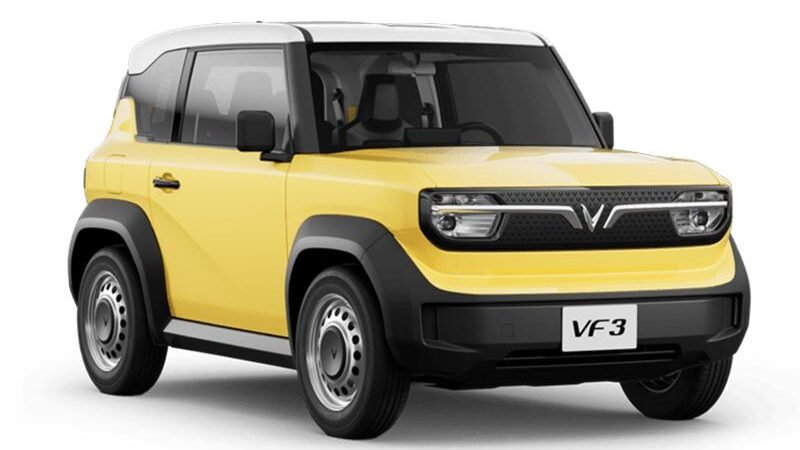
The electric car market is expanding beyond large SUVs and premium electric vehicles. A new category is attracting attention: compact, affordable electric cars designed primarily for everyday city travel. The VinFast VF3 is one of the most interesting vehicles in this category, combining a distinctive boxy design, a compact footprint, an all-electric powertrain and SUV-inspired styling.
Developed by Vietnamese electric vehicle manufacturer VinFast, the VF3 is designed for drivers who want the convenience of a small car without giving up the rugged appearance of an SUV. Its short body makes it particularly interesting for crowded urban streets, tight parking spaces and daily commuting.
For Indian buyers, the VinFast VF3 is especially worth watching because an affordable electric vehicle could appeal to first-time car owners, two-wheeler users upgrading to four wheels, and families looking for a second vehicle. However, its potential success will depend on more than its appearance. Pricing, driving range, charging access, safety equipment, after-sales support and the manufacturer’s launch plans will all influence its competitiveness.
There is one important consideration for anyone researching the car in 2026: the VinFast VF3’s international specifications are available, but its final Indian launch date, price and market-specific specifications have not been firmly confirmed. Recent reporting also indicates that VinFast has reviewed its original localisation plans for India. Buyers should therefore distinguish between published international specifications, media estimates and confirmed Indian-market details.
This comprehensive guide examines the VinFast VF3’s design, battery, range, performance, interior, expected price, charging requirements, ownership considerations and competition, helping prospective buyers decide whether this compact electric SUV deserves a place on their shortlist.
What Is the VinFast VF3?
The VinFast VF3 is a small, fully electric vehicle with a boxy SUV-inspired body. It was developed to provide accessible electric mobility in markets where compact dimensions, everyday practicality and affordability are important.
Unlike conventional electric SUVs that prioritise long-distance travel, high performance or spacious three-row cabins, the VF3 focuses on simpler urban mobility. Its design aims to combine the visual appeal of an SUV with the manoeuvrability of a small city car.
The international model has a two-door layout with seating for up to four occupants. It uses a rear-mounted electric motor and a relatively small battery pack, making it more appropriate for short daily journeys than for buyers who regularly travel long distances.
The VF3 has also attracted attention because it looks different from many conventional budget hatchbacks. Its upright windscreen, squared-off proportions, prominent wheel arches and high-set body give it a miniature off-road vehicle appearance.
Key highlights at a glance
| Feature | International VF3 specification or status |
|---|---|
| Vehicle type | Compact electric mini-SUV |
| Powertrain | Fully electric |
| Seating capacity | Up to four occupants |
| Body style | Boxy, two-door design |
| Battery capacity | Approximately 18.6 kWh |
| Motor layout | Single rear-mounted electric motor |
| Claimed range | Up to approximately 210–215 km, depending on the published specification |
| Maximum power | Approximately 40–43.5 hp, depending on the specification cited |
| Maximum torque | Approximately 110 Nm |
| Indian launch | Not firmly confirmed |
| Indian price | Not officially confirmed |
| Main appeal | Compact dimensions and urban electric mobility |
These figures describe the international model or reported specifications, not a confirmed Indian production version. Published figures can vary by market, test cycle and model configuration.
Why Is the VinFast VF3 Attracting Attention?
Affordable electric vehicles face a different set of challenges from expensive EVs. Buyers may want to reduce petrol expenses, but they also need a car that is practical, easy to park, inexpensive to maintain and convenient to charge.
The VF3 approaches these needs through a compact design and a relatively small battery.
1. A compact alternative to conventional cars
Large SUVs can be inconvenient in congested cities. Narrow streets, crowded residential parking areas and limited charging locations can make a smaller vehicle more attractive.
The VF3’s short body and upright design could help drivers manoeuvre through tight spaces. Its small footprint may also make it easier to park in apartment complexes, shopping centres and office parking areas.
However, a compact exterior does not automatically guarantee a spacious cabin. The VF3’s two-door arrangement requires occupants to enter the rear seats through the front doors, which can be inconvenient for families with children or passengers who regularly sit in the back.
2. Electric driving without a large battery
A large battery is useful for long-distance journeys, but it adds weight and cost. For a car intended primarily for short urban trips, a smaller battery may be a sensible compromise.
The VF3’s approximately 18.6 kWh battery is substantially smaller than the battery packs commonly found in larger electric SUVs. This helps establish its position as a city-oriented EV rather than a direct substitute for every petrol-powered family car.
The trade-off is straightforward: a smaller battery can reduce the initial vehicle cost, but it also provides less energy for driving between charges.
3. Distinctive SUV styling
The VF3 does not follow the conventional rounded shape of many small hatchbacks. Its square proportions, high stance and protective-looking body cladding create a more rugged appearance.
This styling may appeal to buyers who want something visually distinctive without purchasing a large SUV.
4. Potential relevance to India’s entry-level EV market
India has a growing range of electric passenger vehicles, but buyers still need to compare purchase prices, charging arrangements and the practicality of each model.
The VF3 could occupy an interesting position between ultra-compact urban EVs and larger electric hatchbacks. Its ultimate appeal would depend on the price VinFast can achieve, the equipment included and the company’s ability to support customers across Indian cities.
That opportunity should not be mistaken for a confirmed launch. VinFast has evaluated smaller models for India, while more recent reporting has described changes to its localisation strategy.
VinFast VF3 Design: Small Dimensions, Bold Personality
Design is one of the VF3’s strongest distinguishing features. Instead of making a small vehicle look like a scaled-down conventional hatchback, VinFast has given it a recognisable mini-SUV silhouette.
Exterior design and proportions
The VF3 features a relatively upright front end, a short bonnet, a nearly vertical rear section and prominent wheel-arch cladding. These elements create a chunky appearance despite the vehicle’s compact dimensions.
Its design has three practical advantages.
- A compact footprint: The short body can be useful when parking in tight urban spaces.
- An upright driving position: The taller body creates the potential for a more SUV-like seating position, although the actual seating comfort should be assessed in person.
- A distinctive appearance: The squared-off shape makes the VF3 visually different from more conventional small electric cars.
The exterior also uses dark lower-body elements that contrast with the painted body panels. Depending on the market and configuration, available colours and trim details may vary.
Front profile
The front end uses a closed-off grille area, as expected in an electric vehicle that does not need a conventional engine-cooling grille. The VinFast badge and horizontal styling elements provide visual identity.
The design is relatively simple, with a prominent bumper and compact lighting units. This approach helps the vehicle retain a rugged look without adding the visual complexity of a large SUV.
Buyers should check the lighting specification of the exact model offered in their market. Equipment such as LED headlamps, automatic lighting and daytime running lamps should not be assumed from photographs alone.
Side profile
The side profile emphasises the VF3’s short length, upright cabin and squared windows. The relatively large wheels and pronounced wheel arches make the car appear more substantial than its dimensions might suggest.
This is useful for buyers who prefer a bold exterior design. Nevertheless, wheel size and tyre specifications should be evaluated from a practical perspective too. Tyres influence replacement costs, ride comfort, road noise and the availability of replacements in smaller cities.
Rear design
The rear follows the same squared-off styling theme. A near-vertical tailgate helps maximise the body space available within the vehicle’s short overall length.
The rear design also makes the VF3 easy to distinguish from conventional hatchbacks. However, the tailgate’s external appearance should not be confused with luggage capacity: the available cargo space remains limited.
For shoppers who regularly carry shopping bags, backpacks or work equipment, the boot should be inspected in person before making a purchase decision.
VinFast VF3 Dimensions and Practicality
Compact dimensions are central to the VF3’s purpose. They influence parking convenience, manoeuvrability, passenger accommodation and how the vehicle behaves on narrow roads.
Published specifications put the international VF3 at approximately 3.19 metres long, 1.68 metres wide and around 1.62–1.65 metres tall, depending on the specification source. Its wheelbase is approximately 2.08 metres.
| Dimension | Approximate reported figure |
|---|---|
| Length | 3,190 mm |
| Width | 1,679 mm |
| Height | 1,622–1,652 mm |
| Wheelbase | 2,075 mm |
| Ground clearance | Market/specification dependent; reported figures vary |
| Boot capacity | Approximately 36 litres in some published specifications |
These figures should be treated as indicative international-model data until VinFast publishes the final Indian specifications.
How do the dimensions affect city driving?
A car measuring roughly 3.2 metres in length can be easier to position in crowded streets than a substantially longer SUV. Shorter vehicles also tend to require less parking space, although actual convenience depends on the turning circle, steering assistance and visibility.
For apartment residents, the most useful measurement may be the width of the parking bay rather than the length of the car. Check whether the vehicle leaves enough room to open the doors and walk around it.
Is the VF3 suitable for Indian roads?
Its compact size could be advantageous in congested areas, but ground clearance, suspension tuning and underbody protection matter just as much.
Indian roads may include potholes, broken edges, steep parking ramps, uneven speed breakers and flooded sections during heavy rain. Buyers should test the car on the types of roads they regularly use.
Do not assume that SUV styling makes a small EV suitable for serious off-road driving. The VF3 is primarily an urban vehicle, and its suitability for rough surfaces depends on the production specification, tyres, suspension travel and underbody protection.
What about luggage space?
The VF3’s cargo area is one of the compromises associated with its small body. Published boot figures are modest, so it is better suited to daily essentials than to large suitcases.
A practical inspection should include:
- A laptop bag and everyday work items.
- Grocery bags for a typical household purchase.
- A folded stroller, if relevant to the family.
- Small cabin luggage for a short trip.
- The charging cable and any accessories that need to remain in the car.
If you regularly travel with four occupants and luggage, a larger hatchback or compact SUV may be more suitable.
VinFast VF3 Battery and Electric Motor
The battery and motor determine the VF3’s usable range, acceleration, charging requirements and running costs.
Battery capacity
The international VF3 is commonly reported with an approximately 18.6 kWh battery pack. Some automotive specifications identify the battery chemistry as lithium iron phosphate, or LFP, although the exact chemistry and battery-management configuration should be verified for the vehicle sold in a particular market.
LFP batteries are widely used in electric vehicles because of their characteristics, which can include good cycle life and thermal stability. However, battery chemistry alone does not establish the safety, durability or charging performance of an entire vehicle. Battery-pack engineering, cooling, control software and protection systems also matter.
The relatively small battery makes sense for an urban EV. It limits the amount of energy needed for a normal recharge, but also leaves less reserve for long journeys or extended use without charging.
Electric motor and performance
The international VF3 uses a single rear-mounted electric motor. Published power figures are around 40–43.5 hp, with torque reported at approximately 110 Nm. Differences between sources can reflect market specifications or how power is quoted.
These figures are modest compared with larger electric SUVs. That is not necessarily a disadvantage for the VF3’s intended role.
An electric motor can deliver torque without the multi-gear operation of a conventional petrol engine. In urban traffic, this can make low-speed acceleration smooth and responsive.
The VF3 is intended for routine journeys such as:
- Travelling to work or college.
- Driving to local shops and markets.
- Completing short errands.
- Taking children to nearby activities.
- Moving around residential neighbourhoods.
It should not be judged solely by peak power. Steering response, brake feel, suspension comfort, visibility and ease of parking are more relevant to daily city use.
Rear-wheel drive
The rear-mounted motor drives the rear wheels. This arrangement differs from the front-wheel-drive layout used by many small conventional cars.
Rear-wheel drive can help package the electric drivetrain efficiently, but the real-world experience depends on suspension tuning, tyre grip, traction control and weight distribution.
Prospective buyers should test acceleration from a stop, turning behaviour and stability over uneven roads rather than assuming a particular drivetrain layout automatically produces better handling.
What is the top speed?
Top-speed figures published by automotive websites may vary, and a number quoted for one market should not automatically be applied to another.
For a city-oriented EV, a more useful question is whether the vehicle can comfortably maintain the speeds required on the roads you regularly use. Highway suitability also depends on range at sustained speeds, tyre specifications, braking performance and the vehicle’s safety equipment.
Wait for a verified specification sheet before relying on a particular top-speed claim.
VinFast VF3 Driving Range: How Far Can It Travel?
Range is one of the most important questions for anyone considering a small electric car.
The international VF3 has been reported with a claimed range of approximately 210–215 km on a full charge, depending on the specification and source. This is a claimed figure, not a guarantee of the distance every driver will achieve.
Claimed range versus real-world range
An EV’s range changes according to how and where it is driven. Important factors include:
- Average speed and traffic conditions.
- Air-conditioning use.
- Outside temperature.
- Passenger and luggage weight.
- Road gradient and surface quality.
- Tyre pressure.
- Driving style.
- Battery condition and charging habits.
Stop-and-go traffic can sometimes favour electric efficiency because the motor does not idle like a conventional petrol engine and regenerative braking can recover some energy. However, heavy air-conditioning use, repeated acceleration and long periods in traffic can still affect energy consumption.
At higher speeds, aerodynamic resistance increases, so a compact EV may use more energy per kilometre on a fast highway than on slower city roads.
An illustrative range calculation
Suppose a driver plans to use a vehicle with a claimed range of 210 km. Instead of assuming that the entire claimed range will always be available, the driver can plan a more conservative operating range.
For illustration, consider using 70–80% of the claimed figure as a planning allowance. This is not a measured VF3 real-world test result; it is a simple way to create a reserve.
| Planning assumption | Approximate distance |
|---|---|
| Claimed range | 210 km |
| 80% of claimed range | 168 km |
| 70% of claimed range | 147 km |
A driver travelling 25 km per day would cover 125 km over five working days. Under these illustrative assumptions, the car could cover that distance without requiring a full recharge every day, provided actual consumption and charging conditions support the plan.
Someone travelling 60 km daily would need to consider charging more frequently and maintaining a larger reserve.
How to estimate your own driving range
Use this simple process before choosing any electric vehicle:
- Record your average daily distance for one or two weeks.
- Identify longer journeys that occur regularly.
- Check whether you can charge at home or at work.
- Decide how much reserve you want to keep for unexpected trips.
- Compare your needs with an independently tested real-world range, once available for the exact vehicle specification.
This is more useful than buying a car based solely on the largest range number in a brochure.
Is the VF3 suitable for long-distance travel?
It may be suitable for occasional longer trips if the route, charging network and actual vehicle range allow it. Nevertheless, its small battery makes it more naturally suited to urban journeys.
Before taking any small EV on a longer trip, map compatible charging stations, account for detours and charger downtime, and identify backup options. A vehicle’s advertised range is not the same as a guaranteed distance between convenient public charging points.
For buyers who regularly travel between cities, a larger-battery EV may provide greater flexibility.
VinFast VF3 Charging: Home Charging, Public Chargers and Costs
Charging convenience can make the difference between an enjoyable EV ownership experience and a frustrating one.
Because the VF3 has a relatively small battery, the amount of energy needed for a typical recharge is modest compared with that of a larger electric SUV. The important question is whether you can charge the car conveniently where you live.
Home charging
Home charging is often the most practical arrangement for a city EV. Owners can connect the car when it is parked and begin the next day with an adequate battery charge.
Before purchasing the VF3, confirm the supported charging equipment, connector type, maximum AC charging rate and any installation requirements for the specific market version.
A home charging setup may require:
- A suitable parking space.
- An electrical connection approved for the charging equipment.
- A dedicated circuit and appropriate electrical protection.
- Permission from the housing society or property owner, where applicable.
- A professionally installed charger or other manufacturer-approved charging solution.
Do not assume that a regular household socket is appropriate for continuous EV charging. Follow the manufacturer’s instructions and have the electrical installation assessed by a qualified professional.
Public charging
Public charging can help drivers who cannot install a home charger or who need additional energy during a longer journey.
However, charging compatibility must be checked carefully. Not every public charging station supports every connector or charging standard, and a station’s maximum advertised power does not mean every vehicle can use that power.
Before buying, verify:
- The connector supported by the car.
- AC and DC charging capabilities.
- The maximum charging power accepted by the vehicle.
- Charging-station availability near home and work.
- Whether the car supports the public networks you intend to use.
Do not rely on a generic statement that an EV supports fast charging. The actual charging capability must be confirmed from the manufacturer’s technical documentation.
How long does charging take?
Charging time depends on the starting battery level, charger output, the car’s maximum accepted charging power, temperature and charging losses.
A simplified calculation can help illustrate the relationship:
\[ \text{Charging time} \approx \frac{\text{Energy added (kWh)}}{\text{Average charging power (kW)}} \]
For example, adding 10 kWh at an average charging power of 2 kW would take approximately five hours before accounting for charging losses and changes in charging power.
This is an illustration, not an official VF3 charging-time estimate. Actual charging times must be taken from the specification for the vehicle and charger being used.
How much does it cost to charge the VinFast VF3?
The cost depends on the amount of energy added and the electricity tariff or public charging rate.
The basic calculation is:
\[ \text{Charging cost} = \text{Energy used (kWh)} \times \text{Price per kWh} \]
Consider a hypothetical example in which a vehicle uses 15 kWh of electricity and the effective electricity price is ₹8 per kWh.
| Item | Illustrative amount |
|---|---|
| Electricity consumed | 15 kWh |
| Electricity price | ₹8/kWh |
| Energy cost | ₹120 |
This example excludes charging losses, fixed electricity charges and any public charging fees. The ₹8 tariff is illustrative, not a claim about the electricity rate applicable to every Indian household.
For a fair comparison with a petrol car, use actual energy consumption and the tariff applicable to your home or charging network.
Home charging versus public charging
| Consideration | Home charging | Public charging |
|---|---|---|
| Convenience | Excellent if parking and installation are available | Depends on station access |
| Cost | Depends on the household tariff | Depends on the charging provider |
| Installation | May require electrical work and permission | Usually no home installation required |
| Availability | Depends on your property | Depends on the local network |
| Best use | Routine daily charging | Top-ups and journeys away from home |
Practical tip: If you live in an apartment, confirm written permission and the feasibility of installing a charger before booking an EV. This is especially important for buyers whose vehicle purchase depends on charging at home.
VinFast VF3 Interior, Dashboard and Technology
The VF3’s interior follows a minimalist design approach. The cabin is built around a simple dashboard and a central touchscreen rather than a large collection of conventional controls.
The international model has been reported with a 10-inch central display that also serves important driver-information functions. Equipment and software may differ by market and model version.
Dashboard and infotainment
A central touchscreen can reduce dashboard clutter and provide access to functions such as media, vehicle settings and other supported features.
The advantage is a clean layout. The drawback is that touchscreen-dependent controls can require more attention than physical buttons.
When evaluating the VF3, check how easily you can access frequently used functions, including:
- Air-conditioning settings.
- Audio volume.
- Navigation, where supported.
- Vehicle information.
- Phone connectivity.
- Charging information.
Do not assume Apple CarPlay, Android Auto, built-in navigation or connected-car services are standard simply because the car has a touchscreen. Verify which features are available in the Indian-market software, if and when that version is confirmed.
Seating comfort
The VF3 is designed around a compact body and seats up to four occupants in its international configuration.
The front seats are likely to be the most convenient for everyday use, but comfort depends on seat cushioning, adjustment range, steering-wheel position and the driver’s body dimensions.
The two-door layout creates a practical compromise for rear passengers. To reach the back, passengers must generally enter through the front doors and move past the front seats.
This arrangement may be manageable for occasional use, but it can be inconvenient for families who regularly transport children, older adults or several passengers.
Cabin storage
In a small car, cabin storage is especially important. Buyers should inspect door pockets, cup holders, the centre storage area and places for phones and charging cables.
The amount of storage available will influence whether the car feels practical during daily errands. A tidy dashboard does not necessarily mean that the cabin provides enough storage for every household’s needs.
Air-conditioning and climate comfort
Air-conditioning performance is particularly relevant in hot Indian conditions. Electric-car climate control also affects driving range because the system uses energy from the battery.
Before buying, test the cabin cooling after the car has been parked in the sun. Check rear-seat comfort, airflow distribution and how easily the climate controls can be adjusted.
The performance of the Indian-market version should be confirmed through an actual test drive rather than inferred from international photographs.
VinFast VF3 Safety Features: What Should Buyers Check?
Safety deserves particular attention when evaluating a small electric vehicle.
A compact body can be convenient, but buyers should not judge safety from exterior styling, vehicle height or the presence of a touchscreen. The relevant questions concern crash protection, restraint systems, active safety equipment and the quality of the vehicle’s engineering.
Passive safety
Passive safety features help reduce injuries when a collision occurs. These can include airbags, seat belts, head restraints, structural crash protection and child-seat anchorage points.
The exact equipment available on the VF3 should be verified for the market and variant being considered.
Do not assume that an international model’s airbag configuration or child-seat provisions will automatically carry over to an Indian version.
Active safety
Active safety systems are designed to help drivers avoid collisions or maintain control. Depending on the vehicle, these may include electronic stability control, anti-lock braking, traction control, rear parking sensors and a reversing camera.
Availability can vary significantly between vehicle markets and trim levels.
Ask the dealer for the precise equipment list, and test the systems where it is safe to do so. A reversing camera can be useful in a compact car, but it is not a replacement for mirrors and direct observation.
Crash-test ratings
A crash-test result is meaningful only when it applies to the relevant vehicle version and testing programme.
Before purchasing, look for an independently published crash-test assessment for the exact VF3 variant and model year. Check the testing organisation, test date, vehicle configuration and rating criteria.
A rating for another VinFast model should not be treated as proof of the VF3’s safety performance.
Safety checklist before booking
- Confirm the number and location of airbags.
- Verify ABS and electronic stability-control equipment.
- Check child-seat anchorages if you travel with children.
- Ask for official crash-test information applicable to the model.
- Test rear visibility and parking assistance.
- Examine tyre specifications and the availability of replacements.
- Review warranty coverage for the battery and high-voltage components.
- Confirm roadside assistance and accident-repair support.
The final point matters because EV repairs can require specialised tools, trained technicians and access to replacement parts.
VinFast VF3 Expected Price in India
Price will be one of the most important factors determining the VF3’s prospects in India.
Earlier reports placed the expected ex-showroom price in a broad range of approximately ₹8 lakh to ₹10 lakh. Other listings and media estimates have used different prices and launch dates. These are estimates rather than a confirmed manufacturer price list.
As of 29 October 2026, VinFast’s Indian website has listed the VF3 as a coming-soon model with an indicative starting price, while Reuters reported in September that the company had temporarily suspended development and local-manufacturing plans for the VF3 and two other models. This makes it particularly important not to treat a website listing or third-party launch estimate as proof that bookings, deliveries or final pricing are available.
What will determine the final price?
Several factors can affect the cost of an India-spec VF3:
1. Local manufacturing and sourcing
Locally sourced parts can influence production costs, logistics and pricing. However, the benefits depend on the components involved and the scale of production.
2. Battery cost
The battery is a major component of an electric vehicle’s cost. Battery capacity, chemistry, sourcing arrangements and warranty commitments all influence the overall value proposition.
3. Imported components
Import duties, logistics and currency movements can affect the price of a vehicle assembled or manufactured using imported components.
4. Safety and feature levels
The final equipment package can influence both cost and competitiveness. Buyers should compare actual equipment rather than headline prices alone.
5. Battery-as-a-Service options
Some markets have used battery subscription or separation models to reduce the initial purchase price of selected EVs. If VinFast offers such a programme in India, buyers will need to compare the subscription fee and contract terms with an outright battery purchase.
There is no basis for assuming that a particular battery-subscription arrangement will be available with the Indian VF3 until the company confirms it.
Ex-showroom price versus on-road price
The ex-showroom price is not the total amount a buyer pays to put a car on the road.
The on-road price may include:
- Applicable registration and road charges.
- Insurance.
- Optional accessories.
- Extended warranty packages.
- Home-charger installation, if required.
- Financing charges or other optional costs.
Tax treatment and registration costs depend on the applicable rules and vehicle configuration.
Before comparing the VF3 with another EV, obtain a written quotation that separates compulsory charges from optional purchases.
Could the VF3 be an affordable electric car?
Potentially, yes, if VinFast can deliver a competitive purchase price and support the vehicle over its lifetime. But a low headline price is only one part of affordability.
The more useful comparison includes the on-road purchase cost, financing, charging expenses, insurance, maintenance, battery warranty and expected resale value.
For a budget-conscious buyer, a slightly more expensive vehicle with stronger service coverage or greater practicality may offer better overall value.
VinFast VF3 Launch Date in India: Latest Status
The Indian launch timeline deserves a separate discussion because automotive websites have published several different estimates.
Earlier launch reports suggested that the VF3 could arrive in India during 2026. In July 2026, industry coverage described the model as being evaluated for the Indian market, without a confirmed launch date. More significantly, Reuters reported on 1 September 2026 that VinFast had temporarily suspended development and local-manufacturing plans for the VF3, VF6 and VF7 as it reassessed costs associated with localisation. Subsequent reporting described a broader shift towards India-specific EV development.
The manufacturer’s website has also continued to display the VF3 as a coming-soon model. That listing is useful evidence of the model’s place in its product portfolio, but it does not establish a final launch date or confirm that the original manufacturing plan remains unchanged. Electric Vehicles, EV Technology & Mobility
What does this mean for potential buyers?
There are three things to distinguish:
- International model: The VF3 exists as a production electric vehicle in overseas markets.
- Indian-market consideration: The company has evaluated smaller models for India, and automotive media have reported possible launch plans.
- Confirmed Indian availability: A firm launch date, final Indian specifications and a complete price list should be verified directly with VinFast.
A design patent, media report, expected launch date or coming-soon listing is not the same as an official retail launch.
If you are planning to buy a car soon, avoid making a purchase decision that depends entirely on the VF3 arriving by a particular month. Instead, compare currently available vehicles and treat the VF3 as a future option until the company confirms its plans.
For the latest official information, consult the VinFast India website.
VinFast VF3 vs MG Comet EV vs Tata Tiago.ev
The VF3’s potential Indian rivals include the MG Comet EV and Tata Tiago.ev. They appeal to buyers looking for smaller electric cars, although they differ in body style, size, practicality and positioning.
| Buying consideration | VinFast VF3 | MG Comet EV | Tata Tiago.ev |
|---|---|---|---|
| General positioning | Compact, SUV-styled city EV | Ultra-compact city EV | Electric hatchback |
| Exterior design | Boxy, upright mini-SUV | Small, rounded urban car | Conventional hatchback |
| Seating | Up to four in international specification | Four-seat configuration | Five-seat configuration |
| Best suited to | Urban use and short daily trips | Congested city driving | City use with greater conventional-hatchback practicality |
| Boot practicality | Limited | Limited | Generally more versatile for everyday luggage |
| Indian availability | Not firmly confirmed | Established Indian-market model | Established Indian-market model |
| Final Indian VF3 price | Not confirmed | Check current dealer quotation | Check current dealer quotation |
The table compares broad vehicle characteristics rather than every variant. Specifications, equipment and prices can change with model year and trim.
VinFast VF3 vs MG Comet EV
The MG Comet EV is a natural comparison because it also targets urban drivers who prioritise compact dimensions.
The Comet’s particularly small footprint is useful for crowded city streets and parking spaces. The VF3’s boxier proportions and SUV-inspired styling may appeal to buyers who prefer a more upright, rugged appearance.
The practical difference lies in more than exterior design. Buyers should compare rear-seat access, boot space, ride comfort, charging compatibility and visibility.
If your daily driving consists mainly of short urban journeys, both vehicle concepts are relevant. The better choice depends on the actual price, available equipment and how comfortably each car fits your routine.
VinFast VF3 vs Tata Tiago.ev
The Tiago.ev follows a more conventional hatchback format. Buyers who need a familiar five-seat layout and a more versatile everyday vehicle may find it easier to accommodate different passenger and luggage requirements.
The VF3’s compact SUV appearance could be a stronger attraction for some buyers, but the two-door layout is a meaningful compromise.
A family should test both vehicles with the passengers who will use them most often. Rear-seat access and luggage space can matter more than styling when a car is used every day.
Which vehicle should you choose?
Choose according to your needs rather than brand novelty.
- Consider the MG Comet EV if your priority is a compact city vehicle and easy parking.
- Consider the Tata Tiago.ev if you prefer a conventional hatchback layout and need broader everyday practicality.
- Consider the VinFast VF3 if you particularly like its mini-SUV styling and compact electric format, but wait for confirmed Indian specifications, price and service arrangements before committing.
For any of these vehicles, compare the exact variants rather than relying on the cheapest advertised starting price.
Benefits of the VinFast VF3
The VF3 has several characteristics that could make it attractive to the right buyer.
Compact dimensions for urban driving
Its short body is well suited to crowded streets and small parking spaces. Drivers upgrading from a scooter or motorcycle may also find a compact car easier to manage than a large SUV, although a test drive is still essential.
A distinctive exterior
The upright design and rugged styling give the VF3 a recognisable identity. Buyers who want a small vehicle that does not look like a conventional hatchback may appreciate this approach.
A relatively small battery
A smaller battery can reduce the energy required for a typical recharge and may help control vehicle cost. It also means that charging needs can be manageable for drivers with predictable daily distances.
Smooth electric driving
Electric propulsion avoids conventional engine idling and gear changes. This can make routine urban driving quieter and smoother, depending on road conditions, tyres and cabin insulation.
Potentially lower energy costs
Electricity can cost less per kilometre than petrol in some circumstances, especially when a vehicle is charged at home on an appropriate tariff. The actual saving depends on electricity prices, driving efficiency, petrol prices and charging losses.
A possible entry point into EV ownership
If priced competitively, the VF3 could appeal to first-time car buyers who want to move from two-wheelers to an enclosed, climate-controlled vehicle.
However, this benefit depends on the final Indian price and the cost of installing and accessing charging equipment.
Limitations and Potential Disadvantages of the VinFast VF3
A balanced buying decision requires understanding what a compact EV may not do well.
Limited luggage space
The VF3’s small body and reported modest boot capacity make it less suitable for large shopping trips, regular airport transfers or holidays involving several suitcases.
Two-door passenger access
Rear passengers need to enter through the front doors. This may be acceptable for occasional use but less convenient when carrying children, older passengers or a full cabin every day.
A small battery for long journeys
The battery is designed around the car’s urban focus. Frequent intercity travellers may prefer a vehicle with greater range and a broader charging margin.
Uncertain Indian pricing
Without a confirmed Indian price list, buyers cannot calculate its exact value relative to the Comet EV, Tiago.ev or other alternatives.
After-sales support must be evaluated
EV ownership depends on the availability of trained technicians, spare parts, warranty assistance and repair facilities.
The company’s existing Indian operations do not automatically guarantee that every future model will have identical service arrangements or availability. Buyers should verify support for the exact vehicle before making a deposit.
Resale value remains uncertain
A vehicle’s resale value depends on market demand, brand confidence, battery condition, warranty transferability, spare-parts availability and the pace of technological change.
Until there is a meaningful used-car market for the VF3 in India, its future resale value cannot be predicted reliably.
Who Should Consider the VinFast VF3?
The VF3’s design and battery size suggest a relatively specific target audience.
First-time car buyers
People moving from a scooter or motorcycle to a car may appreciate the compact footprint and electric powertrain. The vehicle could suit drivers whose routine consists mainly of commuting and local errands.
The purchase decision should still account for the price difference between an EV and a practical used petrol car, as well as the cost of charging infrastructure.
Urban professionals
A professional who travels a predictable distance to work and has access to charging may find a small EV convenient.
For example, someone travelling 20–30 km daily within a city could have a manageable charging routine if the vehicle’s real-world range supports it.
Households needing a second car
Families that already own a larger vehicle may use the VF3 for commuting, shopping and local appointments.
In this role, its limited luggage capacity and two-door layout may be less problematic because longer journeys can be handled by the primary family car.
Buyers with reliable home charging
Home charging can make a small EV particularly convenient. A buyer who can charge overnight may not need to visit public charging stations regularly.
Who should consider other options?
The VF3 may be less suitable if you:
- Regularly transport five people.
- Need a large boot.
- Frequently drive long distances on highways.
- Have no dependable charging arrangement.
- Need a car immediately.
- Require a confirmed local service network today.
In those situations, an available EV with a more suitable seating layout or larger battery may be a better fit.
How to Evaluate the VinFast VF3 Before Buying
If VinFast confirms the Indian launch, use a structured evaluation rather than relying on promotional photographs or expected prices.
Step 1: Confirm the exact variant
Ask for the model year, battery capacity, motor output, seating configuration, safety equipment and available colours.
Check that the information applies to the Indian-market car rather than an overseas model.
Step 2: Obtain the complete price breakdown
Request a written quotation that identifies the ex-showroom price, registration costs, insurance, optional accessories and charging equipment.
If a battery subscription is offered, request its full terms separately.
Step 3: Test your typical driving route
Drive on the roads you use regularly, including speed breakers, narrow streets, uneven surfaces and congested junctions.
Evaluate steering, visibility, suspension comfort, braking and ease of parking.
Step 4: Check rear-seat access and luggage space
Enter and exit the back seats several times. If you regularly carry family members, ask them to sit in the rear during the test drive.
Bring representative bags or luggage so that you can assess the boot realistically.
Step 5: Verify charging compatibility
Confirm the supported charging connectors, AC and DC charging capabilities, and estimated charging times.
Check the availability of compatible charging points near your home, workplace and frequently visited destinations.
Step 6: Review warranty and service arrangements
Ask about the vehicle warranty, battery warranty, coverage limits, exclusions, roadside assistance and high-voltage repairs.
Clarify whether battery capacity degradation is covered and what conditions apply.
Step 7: Assess the manufacturer’s local presence
Find out where the nearest authorised service facility is located and whether it can carry out repairs on the VF3.
Ask how replacement parts are supplied and what support is available if the car needs a major battery or electrical repair.
Step 8: Compare total ownership costs
Include the purchase price, financing, insurance, charging expenses, routine maintenance, tyres and any home-charger installation.
A car that is cheaper to charge may still be more expensive overall if its purchase price or ownership costs are substantially higher.
Step 9: Wait for a firm booking confirmation
Do not treat a launch estimate as a delivery commitment. Confirm that the model is officially on sale, that bookings are open and that the delivery terms are documented before paying a deposit.
Best Practices for Owning a Small Electric Car
If the VF3 becomes available in India, the following habits can help make ownership more predictable.
Establish a regular charging routine
Charge according to your daily driving needs rather than waiting until the battery is nearly empty. Follow the manufacturer’s recommendations for normal charging and long-term storage.
There is no universal charging percentage that is best for every battery and vehicle, so use the instructions supplied for the actual model.
Monitor tyre pressure
Tyres affect rolling resistance, handling and ride comfort. Maintain the pressure specified by the manufacturer and inspect the tyres regularly.
Avoid changing wheel or tyre sizes without confirming compatibility, clearance and approval requirements.
Plan longer trips in advance
Check charging stations along the route and identify alternatives. Allow extra time for charging and unexpected delays.
Use regenerative braking appropriately
If the vehicle offers regenerative braking, learn how its settings affect deceleration. Regeneration can recover some energy, but it does not eliminate the need for conventional brakes or safe driving habits.
Keep software and service records updated
Follow the manufacturer’s service schedule and any official software-update instructions. Retain records of repairs, warranty work and charging-related issues.
Check the battery warranty carefully
Read the coverage terms rather than relying only on the advertised warranty duration. Understand the mileage limit, capacity-degradation conditions and exclusions.
Protect the vehicle from avoidable damage
Do not drive through floodwater simply because the car is electric. High-voltage systems are engineered with safety protections, but flooding can damage the vehicle and create dangerous conditions.
Follow the owner’s manual for water crossings, towing, accident response and high-voltage warnings.
Common Mistakes to Avoid When Considering the VinFast VF3
Mistake 1: Assuming the advertised range is guaranteed
Claimed range is measured under specified conditions. Your actual range will depend on speed, weather, climate control, traffic and driving habits.
Better approach: Plan around a conservative range and verify real-world results for the exact model.
Mistake 2: Comparing only ex-showroom prices
A low headline price does not reveal the complete cost of ownership.
Better approach: Compare on-road prices, financing, charging, insurance, service support and warranty coverage.
Mistake 3: Ignoring charging access
A small battery is not enough to make EV ownership convenient if you have no reliable way to recharge.
Better approach: Resolve home-charging or public-charging arrangements before buying.
Mistake 4: Overlooking the two-door layout
A four-seat vehicle can still be inconvenient for families if rear-seat access is awkward.
Better approach: Test the rear seats with the people who will use them.
Mistake 5: Assuming international features will be standard in India
Equipment can differ between markets.
Better approach: Obtain the final Indian specification sheet and confirm important features in writing.
Mistake 6: Treating an expected launch date as official
Automotive websites sometimes publish estimates based on earlier product plans.
Better approach: Confirm the launch, price and booking conditions directly with VinFast.
Mistake 7: Ignoring resale and service risks
A new model may have an uncertain resale market, and the availability of specialised repairs matters throughout ownership.
Better approach: Review local service coverage, parts supply, warranty support and the manufacturer’s current product plans.
VinFast VF3 Running Cost: Is It Cheaper Than a Petrol Car?
One of the biggest reasons buyers consider an electric car is the potential to reduce everyday running costs. The VF3’s small battery could make it attractive for drivers who travel predictable distances and can charge at home.
However, a fair comparison should use actual energy consumption rather than battery capacity alone.
Example: Calculating the cost per kilometre
Assume, purely for illustration, that an electric vehicle consumes 12 kWh per 100 km and the effective home electricity tariff is ₹8 per kWh.
The energy cost would be:
\[ \frac{12 \times ₹8}{100} = ₹0.96/\text{km} \]
Now compare that with a hypothetical petrol car delivering 15 km per litre when petrol costs ₹100 per litre.
\[ \frac{₹100}{15} \approx ₹6.67/\text{km} \]
Under these assumptions, the electric vehicle’s energy cost would be lower. These are illustrative figures, not measured VF3 consumption data or a current petrol-price quotation.
The comparison also excludes vehicle purchase costs, charging losses, insurance, maintenance, depreciation and financing.
What about maintenance?
Electric vehicles generally have fewer conventional powertrain components than petrol cars. They do not require engine oil changes, spark plugs or exhaust-system maintenance.
Nevertheless, EVs still require tyre inspections, brake checks, suspension maintenance, cabin-filter replacement where applicable and periodic vehicle inspections. Battery and electrical-system repairs can also be expensive outside warranty coverage.
A realistic ownership calculation should therefore distinguish between routine maintenance savings and the potentially significant cost of a major out-of-warranty repair.
How to calculate your annual savings
Use the following formula:
Annual energy savings = annual distance × (petrol cost per km − EV electricity cost per km)
For a more accurate comparison, substitute your own annual driving distance, local petrol price, actual EV efficiency and home-charging tariff.
If you rely heavily on expensive public chargers, the difference may be smaller than it would be with home charging. If you drive relatively few kilometres each year, the purchase-price difference may matter more than energy savings.
VinFast VF3 and the Future of Affordable Electric Mobility
The VF3 represents a broader idea in the EV industry: electric cars do not need enormous batteries, high power outputs or premium features to serve a useful purpose.
A compact EV can work well when its battery capacity matches the owner’s daily travel, the charging arrangements are convenient and the purchase price is appropriate.
Three developments will influence the future of vehicles in this category.
1. More affordable battery technology
Battery costs, manufacturing scale and local sourcing influence the economics of electric cars. Improvements in these areas could help manufacturers offer more affordable models without removing essential equipment.
However, the relationship between battery costs and retail prices is not automatic. Manufacturing investment, logistics, warranty costs, taxes and dealer expenses also affect the final price.
2. Better charging access
Home charging is useful for drivers with private parking, but apartment residents and people without dedicated parking need dependable alternatives.
Expansion of compatible public charging facilities could make small EVs more practical for a wider group of buyers. Charging access, reliability and pricing will matter as much as the number of charging points advertised by a network.
3. Greater attention to local requirements
A successful Indian-market EV must account for road conditions, climate, family needs, price sensitivity and service accessibility.
A global model may provide a useful starting point, but its local success depends on how well it meets those requirements.
VinFast’s reported shift towards India-specific product development highlights the commercial importance of local cost structures and customer preferences. Whether the VF3 eventually reaches Indian showrooms will depend on the company’s final product and manufacturing decisions.
Frequently Asked Questions About the VinFast VF3
1. What is the VinFast VF3?
The VinFast VF3 is a compact, fully electric mini-SUV developed by Vietnamese manufacturer VinFast. It has a boxy exterior, a two-door body and seating for up to four people in its international configuration. It is primarily designed for urban mobility.
2. What is the expected VinFast VF3 price in India?
Earlier automotive reports estimated an ex-showroom price of approximately ₹8 lakh to ₹10 lakh. However, this is not a confirmed final Indian price. Buyers should wait for an official price list and a complete on-road quotation.
3. When will the VinFast VF3 launch in India?
The final Indian launch date has not been firmly confirmed. Although earlier reports anticipated a 2026 launch, September 2026 reporting described a temporary suspension of the original VF3 development and local-manufacturing plans. Check VinFast India’s official announcements for any subsequent changes.
4. What is the VinFast VF3’s driving range?
The international model has been reported with a claimed range of approximately 210–215 km, depending on the specification and source. Actual range depends on driving conditions, speed, climate control, passenger load and other factors. An official Indian-market range has not been confirmed.
5. What is the battery capacity of the VinFast VF3?
The international VF3 is commonly reported with an approximately 18.6 kWh battery pack. The exact battery specification for a potential Indian version should be confirmed through official technical documentation.
6. How many people can sit in the VinFast VF3?
The international VF3 is designed to seat up to four occupants. Its two-door layout means rear passengers must enter through the front doors, which may be less convenient than a conventional four-door hatchback.
7. Is the VinFast VF3 suitable for long-distance travel?
It is primarily designed for urban driving and shorter everyday journeys. Longer trips may be possible with careful route planning and compatible charging facilities, but its relatively small battery provides less flexibility than a larger-battery EV.
8. Is the VinFast VF3 better than the MG Comet EV or Tata Tiago.ev?
There is no single answer for every buyer. The VF3 offers distinctive SUV-inspired styling, the Comet EV focuses on ultra-compact city driving, and the Tiago.ev offers a more conventional hatchback layout. Compare the exact variants, real-world range, seating practicality, price, charging compatibility and local service support before deciding.
Conclusion: Should You Wait for the VinFast VF3?
The VinFast VF3 offers an appealing concept for urban electric mobility: a compact body, distinctive SUV-inspired styling, a small battery and a straightforward electric powertrain. For drivers who mainly travel short distances, have access to convenient charging and do not need a large boot or easy rear-seat access, it could become an interesting alternative to conventional small cars.
Its success in India, however, will depend on factors that remain unresolved. The final Indian price, launch date, specifications, charging capabilities, safety equipment and after-sales arrangements need to be confirmed before buyers can make a reliable comparison with established alternatives.
If you need a car immediately, compare currently available models such as the MG Comet EV and Tata Tiago.ev. If you are interested specifically in the VF3, monitor VinFast’s official announcements and avoid paying a deposit based solely on an estimated launch date.
The smartest EV purchase is not necessarily the one with the most distinctive design or the lowest advertised price. It is the vehicle that matches your daily travel, fits your budget, can be charged conveniently and offers dependable support throughout ownership.
Call to action: Before choosing your next electric car, calculate your daily driving distance, check your charging options and compare the complete on-road cost of available models. Keep the VinFast VF3 on your shortlist if its compact SUV design appeals to you, but make your final decision only after its Indian-market details are officially confirmed.
JSW Jaecoo J5 EV: Expected Price in India, Range, Features, Specifications and Launch Updates